
Cricket can look confusing at first. The game stops for tea. Players wear white clothes. The rules seem strange. But cricket is simple when someone explains it well. This guide teaches you the full game in plain words — the rules, the gear, the umpires’ signals, the formats and how to start watching today.
The Main Idea
Two teams play. Each team has 11 players. One team bats. The other team bowls and fields. The batting team scores runs. The bowling team tries to stop them and get batters out. Then the teams swap. The team with more runs wins. That is the whole game.
Cricket is the world’s second most popular sport, played and watched by billions — from packed stadiums in India to village greens in England to growing leagues in the USA.
The Field and the Pitch
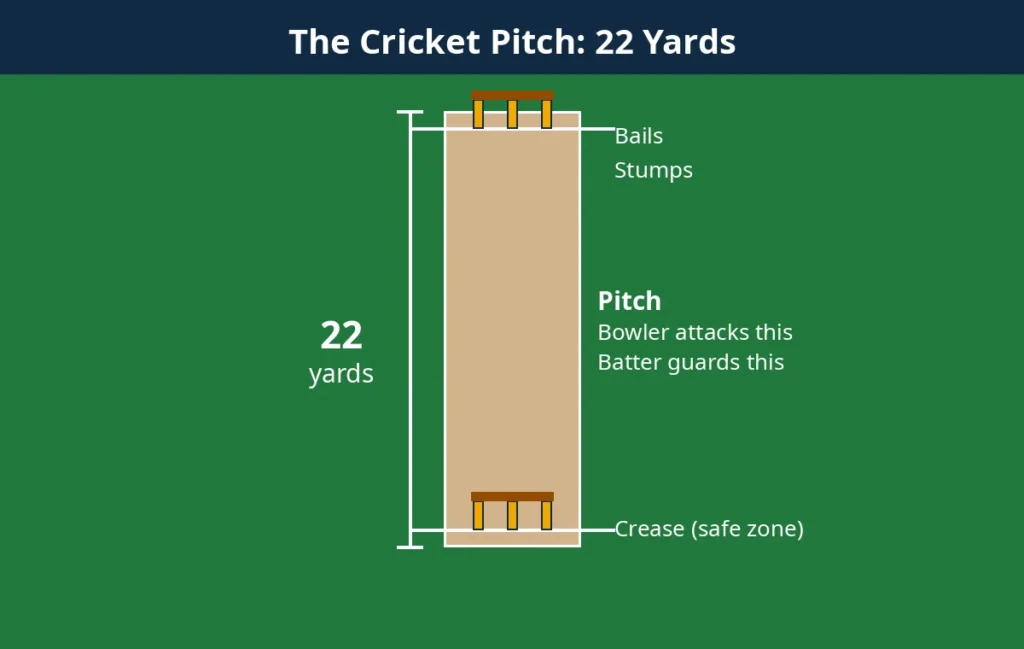
Cricket is played on a big oval field. In the middle there is a long thin strip of ground. It is 22 yards long (about 20 meters). This strip is called the pitch.
At each end of the pitch stand three wooden sticks. These sticks are called stumps. Two small pieces sit on top of the stumps. They are called bails. The stumps and bails together are called the wicket. The bowler tries to hit the wicket. The batter guards it with the bat.
In front of each wicket, white lines mark the crease — the batter’s safe zone. As long as some part of the batter’s body or bat is behind the crease, they cannot be stumped or run out.
The Equipment
You don’t need much to understand the gear:
- The bat: Flat wooden blade with a handle. Batters use it to hit — and to guard the stumps.
- The ball: Hard leather, slightly smaller than a baseball. Red for Test cricket, white for limited-overs games. It swings in the air and seams off the pitch, which is why batting is hard.
- Protective gear: Helmet, pads, gloves and more. A fast bowler can deliver at 145+ km/h, so protection is serious.
- The stumps and bails: Three sticks and two small pieces at each end — the bowler’s target.
How Teams Score Runs
The batter hits the ball. Then the two batters run. Each one runs to the other end. Each full run scores 1 run. Good runners can score 2 or 3 runs from one ball.
If the hit ball rolls or bounces over the edge of the field, that scores 4 runs. The batters don’t need to run. If the ball flies over the edge without touching the ground, that scores 6 runs. A six is the biggest score from one ball — and the most exciting shot in cricket.
Runs also come from extras — free runs for bowling mistakes. Our cricket extras guide explains wides, no-balls, byes and leg-byes.
Why Boundaries Are Worth 4 or 6
The boundary rewards clean, powerful hitting. A ball that reaches the rope along the ground is hard to stop, so it earns 4 runs. A ball that clears the rope in the air is even harder to stop — and more fun to watch — so it earns 6. These values have stayed the same for generations because they keep a perfect balance: batters are rewarded for big shots, but fielders can still save runs with great diving stops near the rope.
Beginners sometimes ask: what if the ball lands exactly on the rope? If it touches the rope, or the ground beyond it, it is a boundary. For a catch to count, the fielder must take it cleanly without touching the rope. This is why you see fielders leaping and throwing the ball back into play — one touch of the rope turns a brilliant catch into six runs.
How Batters Get Out
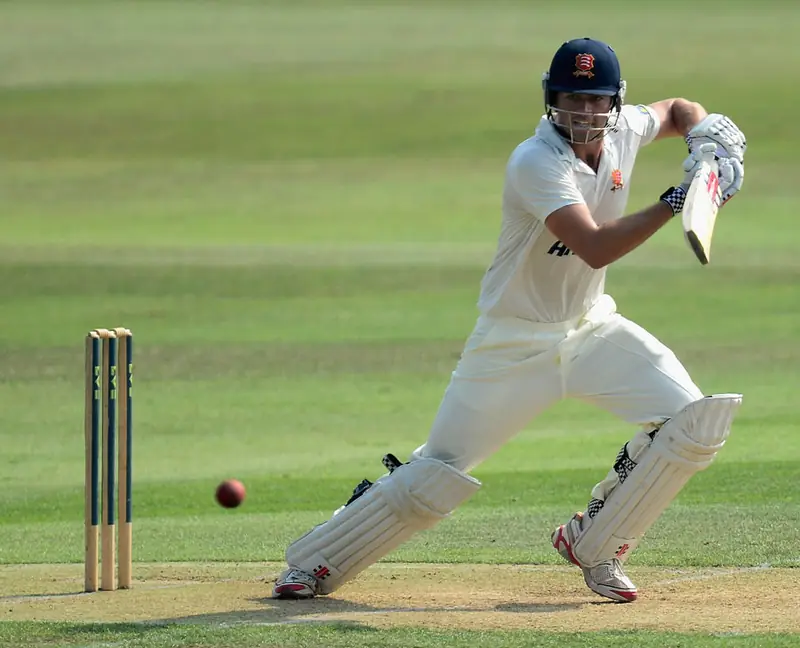
A batter is “out” when one of these things happens:
- Bowled: The ball hits the stumps and the bails fall off.
- Caught: A fielder catches the ball before it touches the ground.
- LBW (leg before wicket): The ball hits the batter’s body in front of the stumps, and the umpire judges it would have hit the stumps. The trickiest rule in cricket — see our full LBW explainer.
- Run out: A fielder breaks the stumps with the ball while the batters are mid-run.
- Stumped: The wicketkeeper breaks the stumps while the batter has stepped out of the crease.
When 10 batters are out, the team’s turn to bat ends. One batter is always left “not out.”
Mistakes Beginners Make About Getting Out
New fans often mix up a few details. The ball must be caught before it bounces — a catch after one bounce is not out at all. A batter is not out LBW if the ball hits the bat first. And a run out only counts if the stumps are broken while the batter is short of the crease — if they are safely home, nothing happens. Also, the fielding side must appeal — they ask the umpire “how’s that?” — before most dismissals count. Watch for these small details and the game will make much more sense.

Overs: How the Game Moves Forward
The bowler delivers the ball six times. Six balls make one over. Then a different bowler starts from the other end of the pitch. This keeps going until the overs run out or 10 batters are out.
Bad balls — wides and no-balls — don’t count, so the over continues until six fair balls are bowled. The number of overs per team depends on the format.
Why this rule exists: six-ball overs keep the game moving and force teams to use different bowlers. Without overs, one great bowler could bowl all day and batters would never get a change of challenge. The over is cricket’s heartbeat — everything is counted in overs, from team totals to bowling figures.
Three Ways to Play Cricket
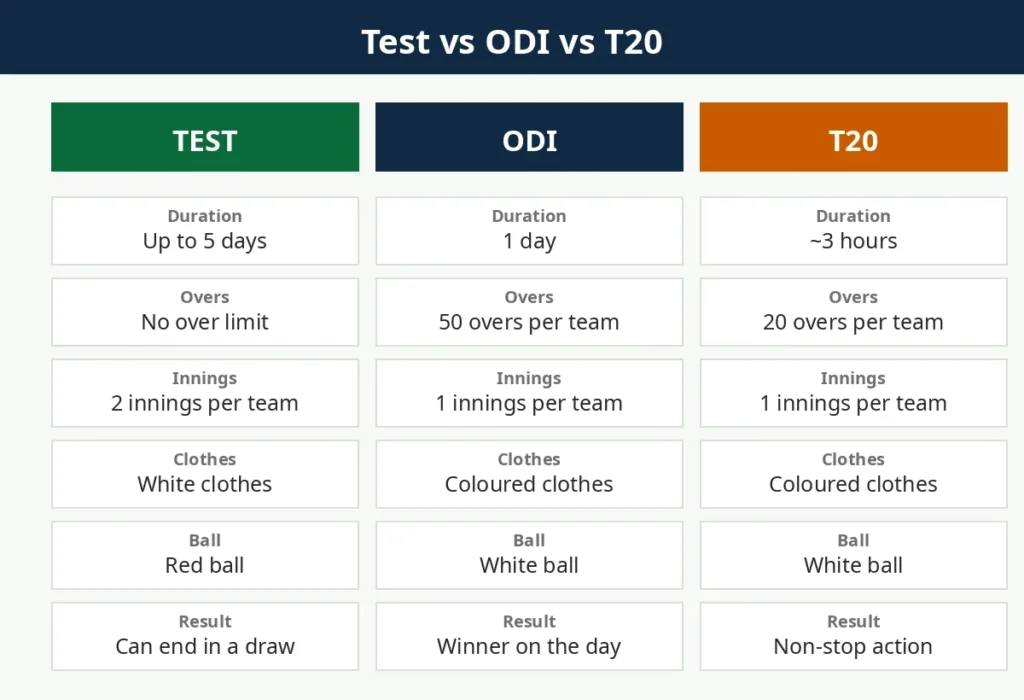
Cricket has three main formats. Same basic rules, very different feel:
- Test cricket: Up to 5 days. The oldest form. No over limit. White clothes, red ball. The ultimate examination.
- ODI: One day, 50 overs per team. Colored clothes, white ball. The format of the Cricket World Cup.
- T20: About 3 hours, 20 overs per team. Fast, loud, full of sixes. The format of the IPL, PSL and BBL.
New fans should start with T20 — short and full of action. Our formats guide compares all three in depth.
Same Rules, Different Feel Across Formats
The basics never change: 11 players, six-ball overs, the same ways to get out. But each format bends the details. Tests allow draws — a five-day fight can end with no winner. Limited-overs games never draw; a tie brings a Super Over. Rain rules like the DLS method only exist in ODIs and T20s, because in Tests play simply resumes when the weather clears. And fielding limits like the powerplay appear only in limited-overs cricket. Learn the core rules once, and you will follow every format with ease.
The Players You Will See
- Batters score the runs.
- Bowlers try to get batters out — fast bowlers with pace and swing, spinners with turn and trickery.
- The wicketkeeper stands behind the stumps and catches what the batter misses.
- Fielders spread around the ground to stop runs and take catches, in spots with wonderful names like “silly mid-off” and “deep fine leg.” See our fielding positions guide.
- Two on-field umpires make every call, plus a third umpire upstairs with TV replays for close decisions.
Umpire Signals: Read the Game Like a Pro
Umpires use hand signals you can learn in a minute:
- Both arms out sideways: Wide ball.
- One arm out sideways: No-ball.
- Raised index finger: Out!
- One hand waved across: Four runs.
- Both hands raised overhead: Six runs.
- Hands on head: The batter is not out (used in reviews).
Learn these six and you’ll follow televised cricket without commentary.
Who Wins the Match?
In ODI and T20 cricket, the team with more runs wins. Simple. If scores are tied, a Super Over — one over per side — picks the winner.
In Test cricket, a team must score more runs and dismiss the other team twice. If five days pass first, the match is a draw. If rain cuts a limited-overs game short, the DLS method sets a fair revised target.
Why this rule exists: Tests demand both scoring and wicket-taking because time is almost unlimited. A team that only bats well but can’t take 20 wickets doesn’t deserve to win a five-day game. In limited-overs cricket, time is fixed, so runs alone decide it — fast, simple and perfect for television.
Women’s Cricket Is Booming
Cricket isn’t just a men’s game. Women’s cricket is one of the fastest-growing sports in the world, with its own World Cups, packed stadiums and professional leagues. The rules are exactly the same. If you’re new, women’s T20 internationals are a fantastic place to start — skillful, competitive and easy to follow.
Words You Will Hear Often
- Duck — a batter out with zero runs.
- Century — 100 runs by one batter in a single turn.
- Maiden over — an over with zero runs scored.
- Powerplay — the opening overs, when fielding limits help the batters. See our powerplay guide.
- Yorker — a ball aimed at the batter’s toes. Nearly unplayable when perfect.
- Googly — a spinner’s trick ball that turns the “wrong” way.
Our cricket terms glossary explains every word a new fan must know.
How to Start Playing
Reading is good; playing is better. Start with a tennis ball and a plastic bat in a park — no gear needed. Join a local club or a weekend tennis-ball league; most welcome total beginners. You’ll learn more in one afternoon of playing than in ten hours of watching.
Beginner tip: when you first play, don’t worry about the fancy rules. Focus on three things: watch the ball, run when your partner calls, and stay behind the crease when the keeper has the ball. The rest will click as you play.
Common Questions
How long does it take to learn cricket?
The basics: one match. True understanding: one season. That’s the fun of it.
Which format should I watch first?
T20. Three hours, constant action, simple story.
Is cricket like baseball?
Distant cousins. Both involve hitting a ball and running, but the rules, rhythm and strategy are completely different.
Why do matches stop for rain?
A wet ball and slippery field are dangerous and unfair. Short delays are normal; long ones bring DLS into play.
Do batters have to run when they hit the ball?
No. If the shot is weak or risky, they can stay put. Running is always a choice — and a gamble.
Can the same bowler bowl every over?
No. Bowlers must alternate ends, so at least two bowlers share the work. This keeps the contest fresh.
What happens if the ball is lost?
Play pauses and the umpires replace it with a ball showing similar wear. Then the game goes on.
Where can I read the official rules?
The Marylebone Cricket Club (MCC) keeps the official Laws of Cricket — the link is at the end of this guide.
Key Takeaways
- Two teams of 11: one bats and scores runs, the other bowls and fields to stop them.
- Runs come from running between the wickets, boundaries (4 for along the ground, 6 for over the rope), and extras.
- Six balls make an over; wides and no-balls must be rebowled.
- The formats differ in overs, days and clothing — never in the core rules.
- Learn the six umpire signals and you can follow any televised match.
- Start with T20, then explore ODIs and Tests once you are hooked.
Start Watching Today
The best way to learn cricket is to watch it with this guide open. Pick a T20 game. Keep the umpire signals in mind. In three hours, the “confusing” sport will start to feel like the most fascinating game you’ve ever watched. Welcome to cricket.